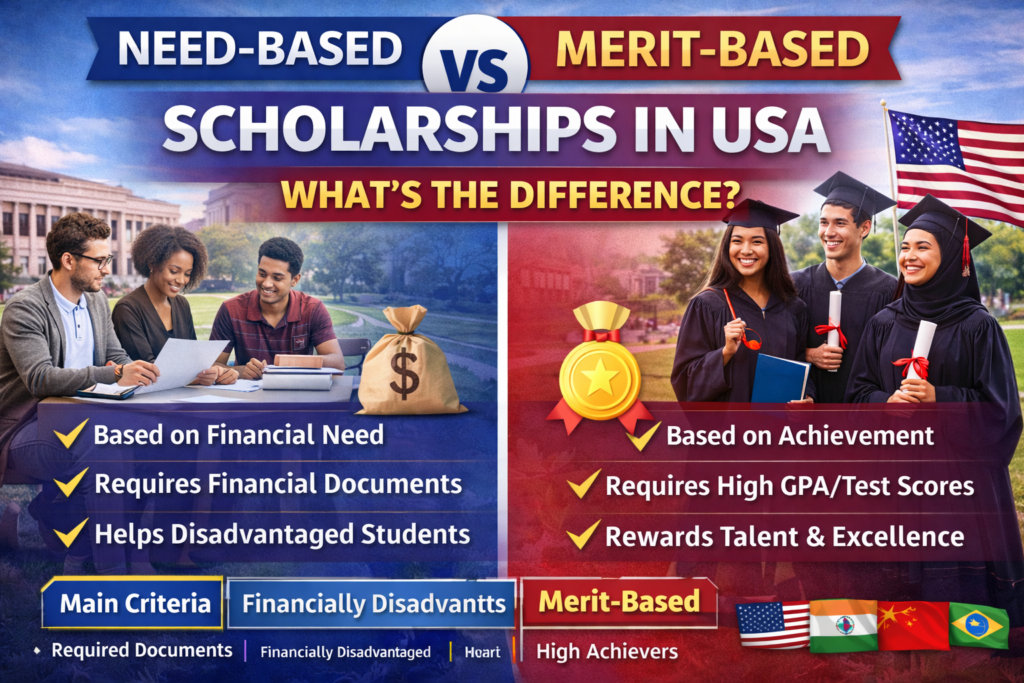
Learn the difference between need- grounded vs merit- grounded literacy in the USA. Discover eligibility, benefits, operation tips, and how transnational scholars can secure backing for study.
What Are Literacy?
Literacy are fiscal awards given to scholars to help pay for educational charges similar as education, books, casing, and other academic costs. Unlike pupil loans, literacy do n’t need to be repaid.
Literacy are offered by:
- Universities and colleges
- Government associations
- Private foundations
- Nonprofit associations
For illustration, programs like the Fulbright Program give fiscal support to talented transnational scholars studying in the United States.
What Are Need- Grounded Literacy?
Description
Need- grounded literacy are awarded to scholars who demonstrate fiscal need. These literacy are designed to support scholars who may not be suitable to go the full cost of education.
Universities frequently determine fiscal need by reviewing:
- Family income
- Financial documents
- Cost of attendance
- Other financial aid received
Numerous top universities, including Harvard University, offer generous need grounded fiscal aid programs.
Crucial Features of Need- Grounded Literacy
- Awarded grounded on fiscal circumstances
- May bear evidence of income or fiscal documents
- frequently offered by universities or government programs
- Can cover education, casing, and living charges
Some universities indeed give 100 need- grounded fiscal aid for admitted scholars.
illustration of Need- Grounded Aid
Numerous institutions in the Ivy League give need- grounded fiscal aid to transnational scholars.
These programs aim to insure that talented scholars can study anyhow of their fiscal background.
What Are Merit- Grounded Literacy?
Description
Merit- grounded literacy are awarded grounded on a pupil’s achievements or capacities, rather than fiscal need.
These achievements may include:
- Academic excellence
- Leadership chops
- Athletic performance
- Cultural gift
For illustration, the Knight- Hennessy Scholars program recognizes exceptional leadership and academic achievement.
Crucial Features of Merit- Grounded Literacy
- Grounded on academic or particular achievements
- May bear high GPA or test scores
- Frequently competitive
- Occasionally renewable each time
Merit- grounded literacy price scholars who demonstrate outstanding performance in academics or adulterous conditioning.
Need- Grounded vs Merit-Grounded Literacy Crucial Differences
Understanding the differences between these literacy can help you determine which bone fits your situation stylish.
| Feature | Need-Based Scholarships | Merit-Based Scholarships |
|---|---|---|
| Main Criteria | Financial need | Academic or personal achievements |
| Required Documents | Financial records | Academic records, achievements |
| Competition Level | Moderate | Often very competitive |
| Purpose | Support financially disadvantaged students | Reward talent and excellence |
Some universities also combine both approaches by offering need- apprehensive merit literacy.
Which Education Is Better?
The answer depends on your situation.
Need- Grounded literacy Are Stylish If:
- Your family can not go education
- You have limited fiscal coffers
- You qualify for fiscal aid programs
Merit- Grounded literacy Are Stylish If:
- You have excellent academic results
- You have leadership or adulterous achievements
- You have strong test scores or bents
In numerous cases, scholars can apply for both types of literacy contemporaneously.
Tips to Increase Your Chances of Winning Literacy
Getting a education in the USA can be competitive, but the following tips can ameliorate your chances.
1. Maintain Strong Academic Performance
High grades and test scores increase eligibility for merit- grounded literacy.
2. Build Leadership Experience
Sharing in clubs, levy work, or community systems shows action and leadership.
3. Prepare Strong Operation Essays
Education panels frequently review particular statements to understand your pretensions and provocation.
4. Apply to Multiple Literacy
Applying to several openings increases your chances of entering backing.
5. Start Beforehand
Begin probing literacy at least one time before your willed study date.
Helpful Scholarship Coffers
Scholars can explore dependable coffers to find education openings.
- Education USA – Functionary advising network for studying in the United States.
- Institute of International Education – Provides education information and exploration.
You can also check education runners on university websites for streamlined openings.
Frequently Asked Questions (FAQs)
1. Can transnational Scholars apply for need- grounded literacy?
Yes, numerous universities in the United States offer need- grounded fiscal aid to transnational scholars, although the vacuity may vary by institution.
2. Do merit- grounded literacy bear fiscal documents?
generally, no. Merit- grounded literacy concentrate on achievements similar as GPA, awards, leadership, or gift.
3. Can I admit both need- grounded and merit-grounded literacy?
Yes. Some universities combine both types of fiscal aid to produce a comprehensive support package.
4. Are Literacy in the USA completely funded?
Some literacy are completely funded, covering education, casing, and living charges, while others give partial backing.
5. When should I apply for Literacy?
Scholars should start applying 8 – 12 months before the academic time begins, as numerous literacy have early deadlines.
Conclusion
Understanding the difference between need- grounded vs merit- grounded literacy in the USA is essential for scholars planning to study abroad. Need grounded literacy support scholars with fiscal challenges, while merit- grounded literacy award exceptional academic and particular achievements.
Both education types give precious openings for scholars to pierce world-class education without inviting fiscal stress. By preparing strong operations, maintaining academic excellence, and probing openings beforehand, scholars can significantly ameliorate their chances of entering education backing.
With the right strategy and fidelity, studying in the United States can come an attainable thing.